The 29th session of the Conference of the Parties (COP29) to the United Nations Framework Convention on Climate Change (UNFCCC) took place from November 11-22, 2024, in Baku, Azerbaijan, bringing together nearly 200 countries. Remarkably, this was the third consecutive year that the COP was presided and hosted by a GECF member country, following COP27 in Egypt and COP28 in the UAE.
COP29 followed COP28, where countries agreed on an energy package that includes tripling renewable energy capacity, doubling the rate of energy efficiency improvements by 2030, and transitioning away from fossil fuels in energy systems. For the gas industry, the critical elements of the energy package are the call for the acceleration of zero- and low-emission technologies, including carbon capture, utilization, and storage, and the acknowledgment that “transitional fuels can play a role in facilitating the energy transition while ensuring energy security,” with natural gas considered the most efficient and widely accepted transitional fuel.
Although COP29 has made progress on various important topics, its outcomes are perceived as having a less direct impact on the gas industry compared to the previous year. A major focus in Baku was building on COP28’s landmark energy package, however, progress stalled as parties failed to agree on the next steps. In particular, proposals for an annual dedicated space on energy transition, new goals for storage and grids, and annual progress reports on transitioning away from fossil fuels were rejected. In the meantime, decisions made on crucial issues such as climate finance commitments, advancements in carbon markets and trade-related climate measures may have significant indirect implications for the gas industry.
COP29 placed climate finance at the center of discussions. This topic is a cornerstone of Article 9 of the Paris Agreement, which stipulates that "developed country Parties shall provide financial resources to assist developing country Parties with respect to both mitigation and adaptation, in continuation of their existing obligations under the Convention." Mitigation and adaptation refer to the two main strategies for addressing climate change. Mitigation aims to reduce or prevent the emission of greenhouse gases into the atmosphere, while adaptation involves adjusting to the impacts of climate change that are already occurring or are anticipated. In 2015, COP21 agreed to establish, prior to 2025, a new collective quantified goal (NCQG) for financial assistance to developing countries, replacing the annual target of $100 billion set at COP15 in 2009. Eventually, COP29 decided to set a NCQG of at least $300 billion per year by 2035 for climate action in developing countries. This funding will come from a variety of sources —public and private, bilateral and multilateral, including alternative sources.
Despite the increase in pledged amounts, many stakeholders view the agreements in this area as insufficient and inefficient. First, the financial commitment falls short of the estimated funding requirements, with concerns of developing countries reflected in a non-binding statement with a call for all actors to "work together to enable the scaling up of financing to developing country Parties for climate action from all public and private sources to at least $1.3 trillion per year by 2035." Second, the statement that funding may come from a wide variety of sources does not impose binding commitments on developed countries to provide public funding, which is the most critical element of the financing. Third, while developing countries have long called for financial support to be provided exclusively in grant-equivalent forms, the final text acknowledges not only grant-based resources but also concessional finance. Fourth, the shift in language from the Paris Agreement's stipulation that developed countries "shall provide financial resources" to the phrasing in COP29, where their responsibility is framed as "taking the lead" in providing financial resources, transforms the commitments of developed countries from a direct obligation to a more aspirational and less enforceable expectation.
Overall, the lower-than-necessary commitments made by developed countries reflect their reluctance to shoulder significant financial burdens, which could present a major challenge to advancing energy transitions as envisioned by these nations, particularly with their strong emphasis on the expansion of renewable energy. The substantial gap between the estimated funding needs of developing countries — around $1.3 trillion per year — and the financial commitments of developed countries, set at $300 billion per year, highlights the difficulties that developing countries will face. With limited financial resources, these countries will encounter significant challenges and constraints in expanding their renewable energy sectors.
In this context, there is a growing global consensus that there is no one-size-fits-all model when it comes to energy transitions, as each region has its own unique challenges and resources. In many regions, energy transitions cannot solely rely on renewables; all energy sources must play a role. Taking into account their unique national circumstances, pathways, and approaches, developing countries will be encouraged to prioritize energy transitions that rely more heavily on traditional energy sources. In this regard, natural gas stands out as a balanced solution to the energy trilemma — ensuring energy security, affordability, and sustainability — due to its numerous economic, social, and environmental benefits. It aligns with most emissions-reduction pathways and plays a crucial role as a reliable backup energy source, complementing the intermittent nature of wind and solar power, while also providing stability for hydroelectric generation, which is heavily dependent on precipitation levels.
The global gas industry is well-positioned to advance the balanced energy transitions, while contributing to the reduction in GHG emissions globally. The Algiers Declaration, adopted at the 7th GECF Summit in March 2024, acknowledged “the contributions of eco-friendly natural gas in addressing climate change challenges, and its importance in achieving just, equitable, orderly, inclusive and sustainable energy transitions, while taking into account national circumstances, capabilities and priorities”. Similarly, the GECF Ministerial Statement of the 26th Ministerial Meeting, held in December 2024 in Tehran, underscored “the pivotal role of natural gas in advancing the United Nations Sustainable Development Goals, notably to end hunger and ensure universal access to energy, as well as in driving orderly, just, inclusive, cost-effective, and nationally determined energy transitions that leave no one behind”.
COP29 also achieved progress on carbon markets under Article 6 of the Paris Agreement, which provides the framework for international collaboration in carbon markets to help meet nationally determined contributions. Parties reached an agreement on the final building blocks that define how carbon markets will function, making country-to-country trading (Article 6.2) and a carbon crediting mechanism (Article 6.4) fully operational. Notably, the agreement opens the door for future international cooperation and integration of national and regional carbon markets, with emission allowances or credits generated under one system to be recognized in another, which would facilitate the creation of a centralized carbon market.
In the meantime, national and regional carbon markets operate independently of Article 6 of the Paris Agreement. They are divided into two types: voluntary and compliance. In voluntary carbon markets, participants are not formally obligated to meet specific targets but choose to offset their emissions voluntarily. In compliance markets, participants have obligations under national or regional emissions trading schemes (ETS). There are around 40 ETSs globally, covering nearly 20% of global GHG emissions. The EU ETS is the first and largest carbon market, operating on a “cap and trade” principle. In this system, a government or regulatory body sets a total emissions cap and issues a certain number of allowances, which are then distributed or auctioned to participants. These allowances are free or bought and can be traded among participants in the market. Over time, the cap on emissions is reduced, which drives a reduction in allowances. In the short and medium term, EU carbon prices are expected to rise to meet the 2030 emissions reduction target of 55% (compared to 1990 levels). This could enhance the competitiveness of natural gas over oil and coal, given its comparatively lower emissions profile, and specifically encourage coal-to-gas switching in the power generation sector. Additionally, ETSs are expected to provide financial incentives to cut emissions through the introduction of low-carbon technologies. In the case of the gas industry, carbon pricing is supposed to encourage the adoption of Carbon Capture, Utilization, and Storage (CCUS). Notably, the gas industry is incentivized to advance CCUS projects when the carbon price ranges from $20/tCO2 in the upstream sector to $100/tCO2 in the electricity generation sector.
COP29 also reached a significant agreement to establish a four-year work plan (2026–2030) aimed at addressing the effects of carbon-cutting policies, with a specific focus on their cross-border impacts. This new framework provides a formal platform within UN climate negotiations to evaluate and discuss trade-related climate measures, including mechanisms like the EU's Carbon Border Adjustment Mechanism (CBAM). The CBAM has sparked considerable debate as it imposes carbon costs on imports based on their carbon emissions, which could be seen as a form of protectionism. By integrating these concerns into the UN climate talks, COP29 acknowledges the delicate balance between advancing climate goals and preserving the principles of fair trade. It remains to be seen how the work plan will address these challenges, but the formal inclusion of trade-related climate measures in future negotiations signals a step toward more inclusive and transparent climate policies that consider both environmental and economic impacts. In this context, the GECF reinforced its stance on the matter, as expressed in the Algiers Declaration, adopted during the 7th GECF Summit in March. Heads of State and Government of GECF member countries rejected the use of climate change policies as a justification for implementing measures that could lead to arbitrary discrimination, emphasizing that such actions are in direct violation of international trade rules.
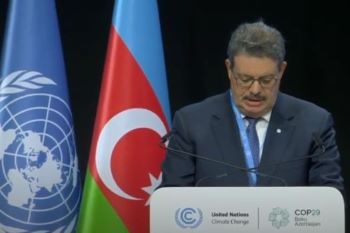
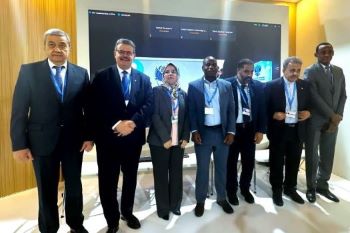
GECF has continued its successful participation in the COPs, aiming to expand the role of natural gas in promoting sustainable development across economic, social, and environmental dimensions (Figure i). At the High-Level Segment of COP29, GECF Secretary General, HE Eng. Mohamed Hamel delivered a statement leveraging the Forum's status as an Observer Member of the UNFCCC. He highlighted the essential role of natural gas in "driving economic growth, improving living standards, reducing household pollution, enhancing urban air quality, and lowering greenhouse gas emissions." He emphasized the need to "facilitate financing for natural gas projects and accelerate the adoption of cleaner technologies like CCUS."
Furthermore, GECF and Azerbaijan co-hosted the GECF ministerial panel discussion on the theme "Natural Gas for Sustainable Development," highlighting the critical role of natural gas in advancing sustainable development goals. Additionally, the GECF partnered with OPEC to hold their third coordination meeting on climate change issues. This meeting reaffirmed their shared commitment to tackling the dual challenges of climate change and energy security while providing coordinated support to their member countries throughout the UNFCCC processes. Additionally, the Forum organized the GECF Pavilion for the second consecutive year, hosting a variety of panels, workshops, and roundtables for energy industry experts. The discussions centered on the critical role of natural gas as an accessible, affordable, reliable, and sustainable energy source in supporting energy transitions and advancing the goals of the Paris Agreement and the UN SDGs. Additionally, GECF and AFREC signed a joint statement promoting a collaborative, multi-fuel approach to clean cooking. This statement underscores their shared commitment to sustainable energy transitions that prioritise Africa’s unique needs, fostering healthier, safer, and more resilient communities.
COP30 will take place in November 2025 in Belém, Brazil. The country assumes the presidency at a time of uncertainty surrounding global climate actions, fueled by changes in leadership in several major countries. Specifically, a new U.S. administration, which will take office in January 2025, is expected to withdraw from the Paris Agreement and increase oil and natural gas production, while the newly-elected EU Commission may adopt a more pragmatic approach to the climate agenda. In this context, the negative narrative surrounding natural gas, which was dominant just a few years ago, may begin to lose momentum.
As a key player in the global energy market, Brazil relies on natural gas across all major sectors, particularly in electricity generation, where it complements the country's dominant hydropower during periods of low precipitation and extended droughts. Given Brazil’s strong international relationships, especially within BRICS and the G20, its presidency of the upcoming COP could play a pivotal role in further fostering a balanced approach to natural gas as a vital enabler of equitable and sustainable energy transitions.